
How Much Do Current Mortgage Rates in Alberta Cost in 2026?
If you’re shopping for a mortgage in Alberta right now, you’re looking at rates in the low-to-mid 4% range for most borrowers. Major lenders like RBC are currently offering variable rates tied to a prime of 3.95% (high-ratio mortgages see slightly better at 3.65%), while TD’s 5-year variable sits at 4.45% prime. On the fixed side, competitive offers from specialty lenders like Nesto show 5-year fixed rates around 4.09%, with variable rates dipping as low as 3.40% for well-qualified buyers. That’s the snapshot, but those numbers are only half the story.
What you actually pay over the life of your mortgage depends on factors you control and some you don’t. Your down payment size, credit score, whether your mortgage needs insurance, and the amortization period you choose can swing your rate by half a percentage point or more. That difference translates to tens of thousands of dollars over 25 years. And if you’re new to Calgary and thinking about first home upgrades understanding your true borrowing cost helps you budget for what comes after the keys are in hand.
The bigger question: should you go directly to your bank or work with a mortgage broker? Both routes have trade-offs in rate access, service, and time investment. This guide breaks down current Alberta mortgage rates, shows you what drives your total cost, and walks through the broker-versus-bank decision so you can lock in the best deal for your situation.
Current Mortgage Rate Ranges in Alberta (2026)

Fixed vs. Variable: What You’re Looking At Today
Fixed and variable rates each offer distinct trade-offs that affect both your immediate budget and what you’ll pay over the life of your mortgage.
Right now, 5-year fixed rates in Alberta sit around 4.09%, locking in that rate for the full term regardless of what happens in the economy. Variable rates are lower, typically around 3.40% or expressed as Prime minus a discount (e.g., Prime, 1.05%), but they move with the prime rate, which major banks adjust in response to Bank of Canada policy changes. You can track how these institutional benchmarks shift by checking OSFI posted bank rates over time.
On a $400,000 mortgage with a 25-year amortization, the difference between 4.09% fixed and 3.40% variable means roughly $180 less per month with the variable option, about $2,160 annually. That savings is real, but only if rates stay stable. If prime climbs by half a percentage point within your first year, your monthly cost rises and much of that initial advantage disappears.
Fixed rates buy certainty: you know exactly what you’ll pay each month for five years, which simplifies budgeting if you’re settling into a new city and managing moving costs. Variable rates offer lower starting costs and the potential to save if rates drop, but you accept the risk of payment increases if economic conditions change. Neither is universally better; the right choice depends on your comfort with fluctuation and how much breathing room your budget has for potential increases.
Closed vs. Open Mortgage Rates
Closed mortgages lock you in for the entire term, and that commitment earns you the lowest rates available. Open mortgages let you pay off the balance or switch lenders anytime without penalty, but you pay a steep premium for that flexibility, typically 1% to 2% higher than comparable closed rates.
Most Calgary homebuyers choose closed terms because the rate difference adds thousands to borrowing costs over five years. If you’re settling into a long-term home and have stable income, closed mortgages deliver better value. Open mortgages make sense only in specific situations: you’re selling your property soon, expecting a large windfall to pay down the balance, or you need maximum flexibility during a transitional period.
For newcomers to Calgary, closed terms usually align better with typical homebuying plans. You get the best rate, and modern OSFI mortgage underwriting guidance still allows annual prepayment privileges, often 10% to 20% of the original balance per year, within a closed mortgage. That gives you room to pay down faster without sacrificing the lower rate that closed terms provide.
Breaking Down Your Mortgage Costs
Where Your Mortgage Payment Goes
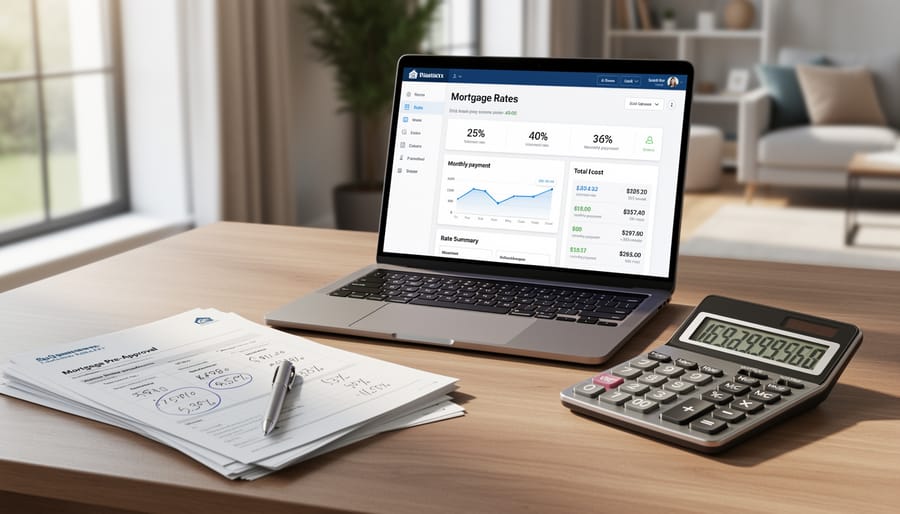
When you make a mortgage payment in Alberta, you’re covering two things: principal (the amount you borrowed) and interest (the cost of borrowing that money). In the early years, most of your payment goes toward interest, not toward actually owning more of your home.
Here’s what that looks like in practice. On a $400,000 mortgage at 4.09% amortized over 25 years, your monthly payment is roughly $2,145. In your very first payment, about $1,363 goes to interest and only $782 reduces your principal. That’s nearly two-thirds going to the bank, not to your equity.
The rate you lock in makes a big difference here. Drop that rate to 3.40% (the current 5-year variable rate some lenders offer), and your first payment shifts to around $1,125 in interest and $885 toward principal. You’re building equity faster and paying less overall, even though your monthly payment only drops by about $120.
As you move through the term, the split gradually reverses. By year five, you’re paying closer to half-and-half, and by the final years, almost everything goes to principal. But those early years, when interest dominates, are exactly why even a small rate difference compounds into thousands of dollars over the life of your mortgage.
What Changes Your Mortgage Rate in Alberta

Down Payment Size: High-Ratio vs. Conventional
Your down payment determines which rate tier you’ll access in Alberta’s mortgage market. Put down less than 20% and you’re classified as a high-ratio borrower, requiring mortgage default insurance through CMHC, Sagewell, or Canada Guaranty. That insurance costs 2.8% to 4% of your mortgage amount (added to your loan), but it actually unlocks lower interest rates. RBC’s current high-ratio prime rate sits at 3.650%, compared to their standard 3.950% prime for conventional mortgages, a 0.30% advantage that can save you thousands over a five-year term.
Here’s the trade-off Calgary newcomers need to understand: a 5% down payment on a $500,000 home means you’ll pay roughly $13,300 in insurance premiums (financed into your mortgage), but you’ll secure that 3.650% rate instead of 3.950%. Over five years, the lower rate saves you about $3,800 in interest, partially offsetting the insurance cost. The math shifts when budgeting for home ownership: if stretching to 20% down depletes your emergency fund or delays your purchase significantly, the high-ratio route often makes practical sense despite the insurance fee. Lenders view insured mortgages as lower risk, which explains why they price them more competitively.
Amortization Length Impact
Stretching your mortgage past the standard 25-year amortization means paying a higher rate. Major lenders add about 0.10% to their variable rates for amortizations over 25 years, RBC, for example, charges 4.050% on its variable rate for extended terms versus 3.950% for conventional 25-year amortizations. That gap sounds small, but on a $400,000 mortgage, an extra 0.10% costs roughly $23 more per month and adds thousands in interest over the life of the loan.
The trade-off is lower monthly payments right now. A 30-year amortization reduces your payment by around $150, $200 monthly compared to a 25-year term, which helps if your budget is tight. But you’ll pay interest on that principal for five extra years, and at a slightly higher rate to start. For Calgary newcomers managing affordability, the extended amortization can make homeownership accessible, just understand you’re buying breathing room at the cost of long-term interest expense.
Credit Score and Income Verification
Your credit score and income documentation play a major role in determining whether you qualify for the lowest advertised rates or pay a premium. Lenders reserve their best rates, like the 4.09% five-year fixed or 3.40% variable you see advertised, for borrowers with credit scores above 680 and verifiable, stable income. Drop below that threshold, and you’ll face higher rates or need to work with alternative lenders.
For newcomers to Calgary, this can present a challenge. If you’re building Canadian credit from scratch, you may start with a limited credit file. Focus on establishing a solid credit history quickly: open a secured credit card, become an authorized user on a spouse’s account, and ensure all rent and utility payments are reported where possible. On the income side, lenders want two years of tax returns and recent pay stubs. Self-employed borrowers or those with variable income face tougher scrutiny and may need to provide additional documentation or accept slightly higher rates until they’ve established a longer Canadian income track record.
Working with a Mortgage Broker vs. Going Direct to Banks
When you’re securing a mortgage rate in Alberta, you face a choice: shop lenders yourself or let a mortgage broker handle the legwork. Each path offers different access, service levels, and costs.
A mortgage broker works with multiple lenders at once, banks, credit unions, monoline lenders, and private institutions. They submit your application to several sources and compare offers on your behalf. You get access to rates and products you wouldn’t find walking into a single bank branch, often including promotional rates or programs designed for newcomers to Calgary who may not have extensive Canadian credit history. Brokers typically don’t charge you directly; they earn commission from the lender when your mortgage closes.
Going direct to your bank means you see only that institution’s rates and products. You handle the application process yourself, negotiate one-on-one with a single lending officer, and rely on your own knowledge to assess whether the rate offered is competitive. The advantage: you work with a familiar institution, and if you have an existing relationship (chequing account, investments, credit cards), you may have leverage to negotiate a better rate or waive certain fees.
Pros (Mortgage Broker)
- Access to multiple lenders and rate options in one submission process.
- Broker compares offers and negotiates on your behalf, saving you time.
- No direct cost to you; lender pays the broker commission.
- Often better access to programs for newcomers or non-traditional credit profiles.
Cons (Mortgage Broker)
- You don’t control which lenders see your application or how it’s presented.
- Broker relationships may influence which lenders they prioritize.
- Less personal relationship with the actual lender funding your mortgage.
The DIY bank approach gives you direct control and relationship continuity, but you won’t know if another lender would have offered 0.20% less without doing the research yourself. For rate shopping in 2026, the broker route delivers broader market visibility; the direct route works best when you already have strong bank loyalty and negotiating confidence.
Timing Your Mortgage: Renewals, Switches, and New Purchases
The timing of your mortgage transaction significantly affects both the rate you qualify for and your options. Whether you’re purchasing your first Calgary home, renewing an existing mortgage, or switching lenders, the current rate landscape applies differently to each scenario.
New Home Purchases
First-time buyers and those purchasing a new Calgary property can lock in today’s rates for a future closing date through a rate hold. Lenders typically guarantee your rate for 90 to 120 days, protecting you if rates climb before your purchase completes. If rates drop during your hold period, most lenders will honor the lower rate instead. This makes shopping early worthwhile, particularly in a fluctuating rate environment. You can secure pre-approval and a rate hold before you’ve even found a property, giving you certainty on your borrowing costs as you house hunt.
Mortgage Renewals
If your current term is ending, you’ll receive a renewal offer from your existing lender roughly four to six months before maturity. The rate on that initial offer is rarely the best available. Start shopping other lenders about 120 days before your renewal date to compare rates and terms. You can switch lenders at renewal without penalty, refinancing costs, or re-qualifying under current stress test rules, provided you’re keeping the same mortgage balance and not accessing additional equity.
Switching Lenders Mid-Term
Breaking your current mortgage early to switch lenders for a better rate involves prepayment penalties that often wipe out any savings unless rates have dropped substantially. Calculate the penalty (typically three months’ interest or the interest rate differential, whichever is higher) against the total interest savings over your remaining term before making this move.
Key timing considerations to remember:
- Rate hold periods typically last 90-120 days for new purchases, protecting you from rate increases while you finalize your transaction
- Start shopping for renewal rates 4-6 months before your maturity date, rather than accepting your lender’s first offer
- Switching lenders at renewal is penalty-free and doesn’t require re-qualifying, but mid-term switches carry substantial penalties
- New purchase rate guarantees let you lock in today’s rates while you house hunt, with most lenders honoring lower rates if they drop during your hold
Your situation determines your leverage. New buyers have the most negotiating power and time to shop. Those renewing can switch freely without penalties. Mid-term switchers face the highest hurdles and should verify that any rate savings exceed their break costs before committing.
Where the Money Goes
When you secure a mortgage in Alberta, understanding where your money goes helps you see beyond the rate itself. Your mortgage payment isn’t a single chunk, it’s divided into specific categories that determine your actual housing costs.
The largest portion goes to principal and interest. This is your core mortgage payment, calculated from the rate you lock in and your loan amount. At current 2026 rates around 4.09% for fixed or 3.40% for variable, a $400,000 mortgage translates to roughly $2,050, $2,150 monthly, with most of the early payments covering interest rather than reducing your principal balance.
If you put down less than 20%, you’ll add mortgage default insurance premiums to your total cost. CMHC charges 2.80% to 4.00% of your loan amount, typically added to your mortgage rather than paid upfront, which means you’ll pay interest on the premium itself over your entire amortization.
Property taxes represent another significant line item. In Calgary, expect annual property taxes of 0.63% to 0.70% of your home’s assessed value, which lenders often collect monthly through your mortgage payment.
You’ll also budget for home insurancerequired by all lenders, running $1,200, $2,000 yearly for typical Calgary properties. Factor in home maintenance costs of 1% of your home’s value annually, though this sits outside your mortgage payment itself.
These combined expenses give you the true cost of homeownership beyond just the mortgage rate.
What Changes the Price
Beyond your financial profile and property details, several external forces shift mortgage rates across Alberta’s lending landscape. Understanding these broader price drivers helps you time your mortgage decision and set realistic expectations when shopping for rates in Calgary.
Bank of Canada policy decisions ripple through every lender’s rate card. When the central bank adjusts its overnight rate, variable mortgage rates move almost immediately, and fixed rates respond to bond market anticipations of future policy. A quarter-point cut can translate to meaningful monthly payment savings, while a series of hikes reverses that benefit quickly.
Lender competition intensity varies seasonally and regionally. Spring typically brings more aggressive rate discounting as banks compete for the busiest buying season, while December often sees less negotiation room. Calgary’s robust housing market means lenders fight harder here than in slower markets, creating opportunities to pit offers against each other.
Bond market movements directly influence fixed mortgage pricing. Lenders price fixed rates based on government bond yields plus their profit margin. When five-year bond yields climb on inflation concerns, fixed rates follow within days, even if the Bank of Canada hasn’t moved yet.
Your property type and location matter more than many realize. Lenders view condos as slightly higher risk than detached homes, often adding 0.05% to 0.10% to the rate. Rural properties outside Calgary’s core typically face premiums or outright rejections from major banks, pushing you toward alternative lenders at higher costs.
For practical guidance on navigating Calgary’s lending environment as a new resident, check out these Calgary newcomer tips to help you establish your financial footing.
Common Questions About Alberta Mortgage Rates
Are mortgage rates in Alberta different from other provinces?
Rates are largely the same across Canada since major banks set their prime rates nationally, but you may see slight variation in promotional offers or discounts available through local brokers. The biggest difference is market competition, Calgary’s active real estate market means lenders often compete more aggressively here.
How often do variable mortgage rates change?
Variable rates move whenever lenders adjust their prime rate, which typically happens in response to Bank of Canada overnight rate decisions (announced eight times per year). Your payment amount might stay fixed, but the portion going to principal versus interest shifts each time the prime rate changes.
Can I negotiate a rate lower than what’s posted online?
Yes, posted rates are almost always negotiable, especially if you have strong credit, a larger down payment, or existing accounts with the lender. Brokers can often access wholesale rates that are significantly below what you’ll see advertised on bank websites.
What rate should I expect as a newcomer to Canada settling in Calgary?
Without established Canadian credit history, you’ll likely pay a premium above the best advertised rates, expect to add 0.5% to 1.0% initially. Once you’ve built credit and employment history here for 12 to 24 months, you can refinance or renew at standard rates.
When is the best time to lock in my mortgage rate?
Most lenders offer a 90- to 120-day rate hold once you’re pre-approved, which protects you if rates rise while you’re house hunting. Lock in as soon as you have a firm purchase agreement, since waiting gives you no advantage if rates climb and only downside risk.
Beyond these common questions, many Calgary newcomers wonder whether they should prioritize the lowest possible rate or focus on prepayment flexibility and penalty terms. The answer depends on your timeline: if you plan to stay in the home and keep the mortgage for the full term, chasing the absolute lowest rate makes sense. If there’s any chance you’ll sell, refinance, or pay down aggressively within a few years, a slightly higher rate with better terms can save you thousands in penalties.
Another frequent concern is whether to apply with multiple lenders to compare offers. Each mortgage application triggers a credit inquiry, but if you complete all your rate shopping within a two-week window, the inquiries typically count as a single hit to your credit score. Just avoid spacing applications out over months, which can look like you’re taking on multiple debts and lower your score unnecessarily.
Understanding current mortgage rates in Alberta means recognizing that the numbers you see advertised, whether it’s a 5-year fixed at 4.09% or a variable rate at 3.40%, represent the best-case scenario. Those lowest rates go to borrowers with strong credit, stable income, and conventional down payments of 20% or more. If you’re new to Calgary and still building your financial profile here, you’ll likely pay a premium, but that doesn’t mean you’re stuck with whatever your bank offers first.
Shopping around matters. Fixed rates give you payment certainty, which appeals to many newcomers who want predictable costs while settling into a new city. Variable rates start lower but move with the prime rate, so they carry more risk if rates climb. Neither choice is universally better, it depends on your risk tolerance and how long you plan to stay in the home.
Your next step is getting pre-approved before you start house hunting. A pre-approval tells you what rate you’ll actually qualify for, not just what the ads promise. It also gives you a rate hold, typically 90 to 120 days, protecting you if rates rise while you search for a property.
Compare offers from at least three sources: your bank, a credit union, and a mortgage broker who can access multiple lenders. Ask each one to break down the total cost of borrowing, not just the rate. The difference between a 4% and a 5% rate over 25 years can mean tens of thousands of dollars, so taking the time to compare now pays off for years to come.