
8 Educational Activities for Preschoolers You Can Try at Home or Around Calgary
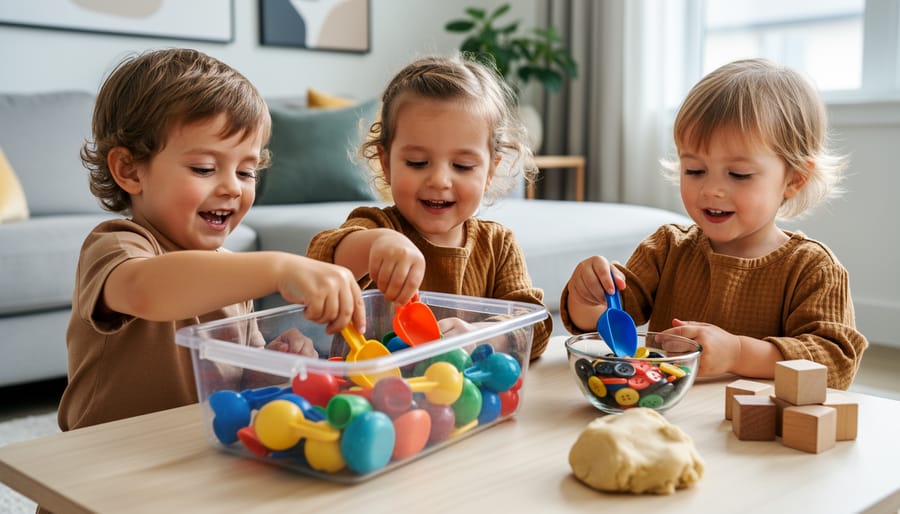
The best educational activities for preschoolers are the ones that feel like play: sensory bins, nature scavenger hunts, counting with everyday objects, library storytime, play dough, kitchen science, music and movement games, and pretend play with friends. None of them need special supplies, a big budget, or more than 10 to 20 minutes to get started. Kids between three and five learn fastest when their hands are busy and their imaginations are switched on, so the goal is simple: set something up, then follow their lead.
If you’re new to Calgary, you’ve got good news. Free storytimes at local libraries, wide-open neighbourhood parks, and community centre programs make it easy to try most of these ideas close to home. Winter can limit outdoor time, so a few of the activities below are built for cozy days indoors when the temperature drops.
Each idea includes the skills it builds and a practical tip you can use today.
How We Picked These Preschool Learning Activities
Choosing activities for little ones can feel overwhelming, so we kept things simple. Every idea on this list comes from common early-childhood learning approaches, and the research behind play-based learning for preschoolers is a big reason we leaned toward hands-on, playful ideas. To be upfront, we haven’t tested these ourselves. They’re curated suggestions for you to try and adjust to your own child.
Here’s what each activity had to meet:
- Age-appropriate for kids between 3 and 5.
- Low prep, so you can set it up in a few minutes.
- Budget-friendly, using items you likely have at home.
- Works in any season, whether it’s a sunny afternoon or a cold Calgary winter day.
- Builds a clear skill, like language, early math, fine motor control, curiosity, or social skills.
That last point matters most. Each of the eight activities below highlights the main skill it supports, so you know what your child is practicing while they play. Calgary weather can change quickly, so we also favoured ideas that move easily between indoors and outdoors. Pick one that suits your day and go from there.
Eight Preschool Activities Worth Trying
1. Sensory Bins, Hands-On Exploring for Little Fingers
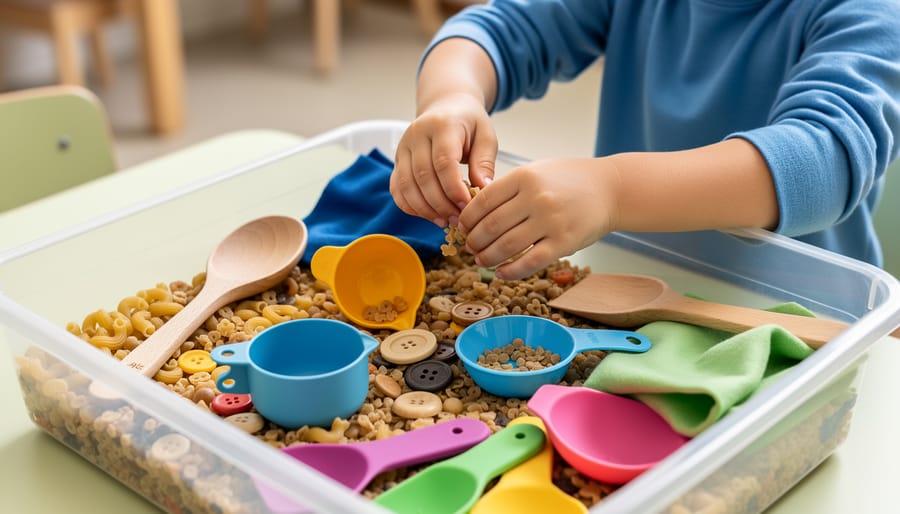
Grab a plastic tub and fill it with dry rice, uncooked pasta, or even a few inches of water. Toss in some scoops, cups, and small toys, and your preschooler has a mini world to explore. They’ll pour, dig, sift, and sort, and every one of those little motions strengthens the tiny muscles in their fingers and hands, which they’ll need later for holding a pencil.
Sensory bins are great for language, too. Ask questions as they play: “Is the rice smooth or bumpy?” “Can you find something that sinks?” You’ll hear new words like scoop, trickle, heavy, and float pop up naturally. Water play also sneaks in early science, because kids start noticing what floats, what sinks, and how liquids move.
This one is perfect for a cozy Calgary winter day when it’s too chilly to head outside. Lay an old towel or baby bath mat under the bin, grab a bag of rice or pasta from the pantry, and you’re set in minutes.
2. Nature Scavenger Hunts, Learning Outside in Calgary’s Parks
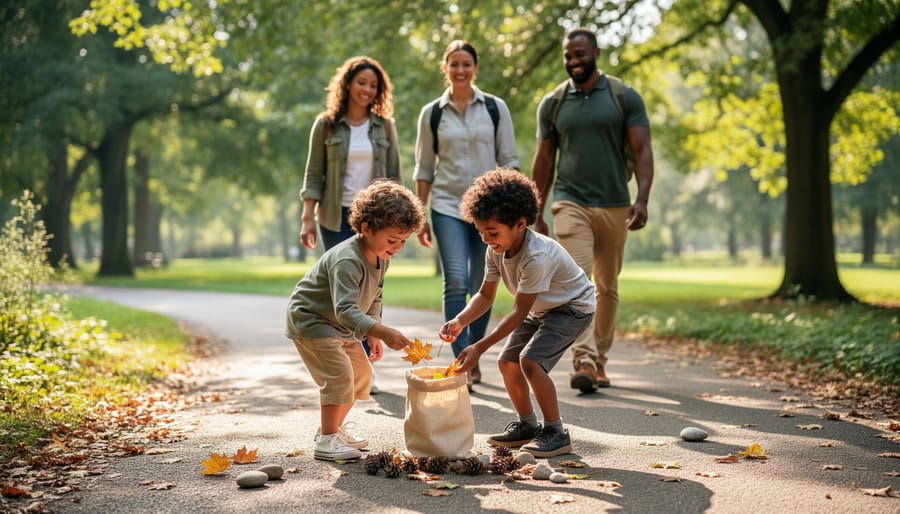
Grab a piece of paper and jot down a short list of things for your preschooler to find: a leaf, a pinecone, something smooth, something bumpy, a feather if you’re lucky. For kids who can’t read yet, draw quick pictures instead of words. Then head to the nearest park or pathway and let the hunt begin.
This one quietly builds a lot. Your child practices observation as they scan the ground, counting as they gather three leaves or five sticks, and vocabulary as they describe what they’ve found. Words like “rough,” “damp,” “tiny,” and “curly” come up naturally when little hands are holding the evidence.
Calgary makes this easy. With pathways and green spaces woven through most neighbourhoods, you rarely have to travel far to find a good hunting ground. A quick walk from your front door can be enough.
One practical tip: our weather loves to change its mind. Dress your little one in layers, bring a hat and mitts when it’s cool, and pack a small bag for treasures. Short and playful beats long and exhausting every time.
3. Counting and Sorting with Everyday Objects
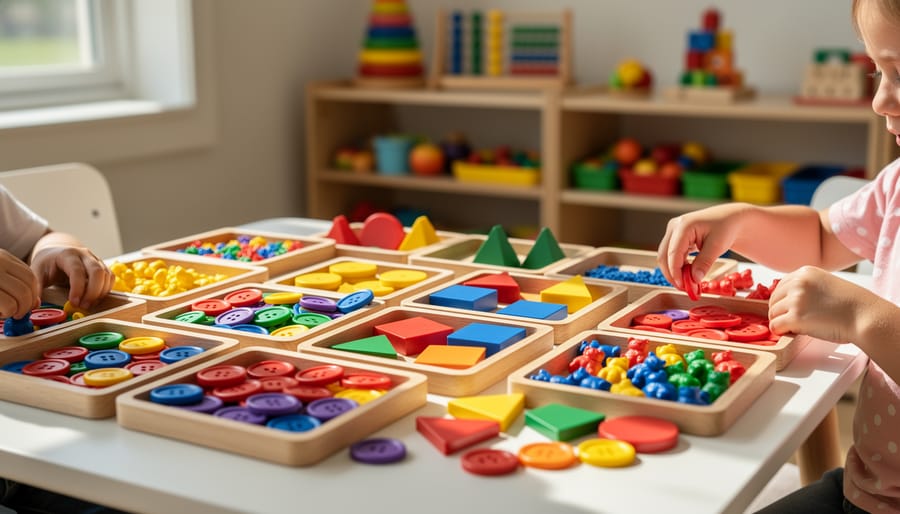
Grab a handful of things you already own and you’ve got an early math lesson. Buttons, blocks, socks, cereal pieces, or even a pile of mixed spoons all work well.
Start with sorting. Dump everything in the middle of the table and ask your child to make piles by colour. Once that feels easy, switch the rule: sort by size, then by shape. Changing the rule is where the real thinking happens, because your child has to notice what makes things alike and different.
Then add counting. Line the objects up and touch each one while counting out loud, up to 10 for newer counters and 20 for those who are ready. Ask “How many red ones are there?” or “Which pile has more?” to stretch the idea.
Keep it short, five or ten minutes is plenty. Snacks make a great motivator, since a child who sorts the crackers gets to eat them. It’s a handy rainy-day or snowy-day activity that needs no setup and no shopping trip.
4. Storytime and Library Visits, Building Early Literacy
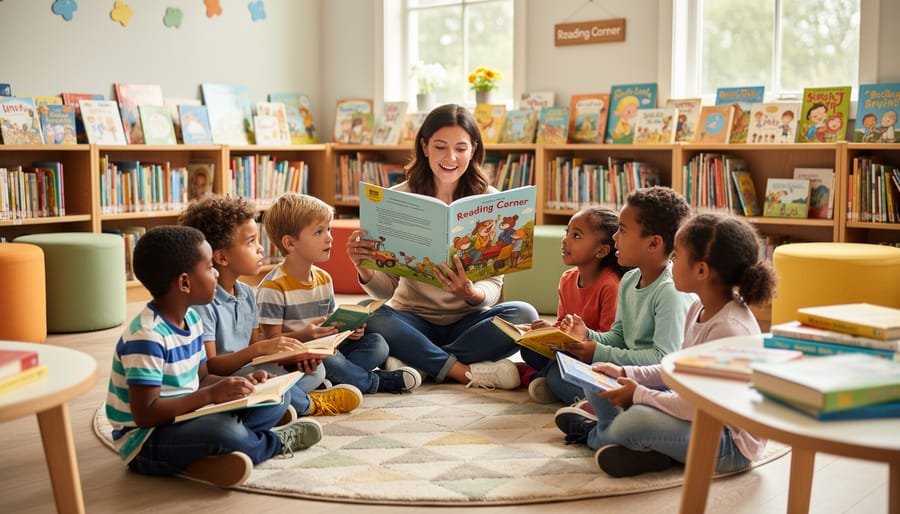
Reading together is one of the simplest ways to build a preschooler’s language, and it only takes ten or fifteen minutes. Pick a cozy spot, let your child choose the book, and pause to ask what they think happens next. Point to pictures, name what you see, and don’t worry if you read the same favourite twenty times. Repetition is how little ones pick up new words.
For fresh material, head to your local library. Calgary Public Library branches offer free membership, so newcomers can borrow picture books without spending a cent. Many branches also run free early literacy programs with songs, rhymes, and stories for young children. These sessions are a friendly way to meet other families in your neighbourhood, which is especially nice when you’re still settling into the city.
Programs and schedules change, so check with your nearest branch before you go. A quick call or a look at their website will save you a wasted trip on a cold day.
5. Play Dough and Craft Time for Creativity and Strong Hands
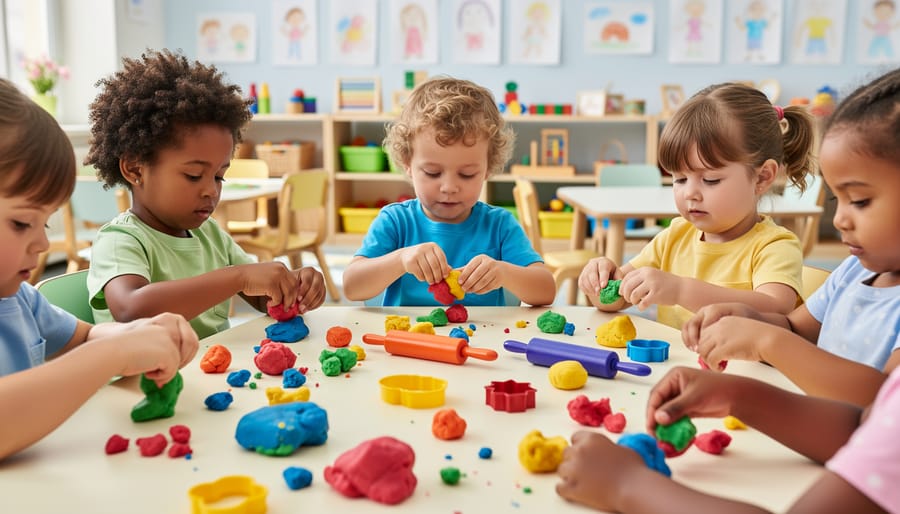
Play dough is one of the easiest ways to get little hands working. Squeezing, rolling, and pinching build the small muscles preschoolers will later use to hold a pencil, so you’re sneaking in handwriting practice without any worksheets.
You can make a quick batch at home with flour, salt, water, and a splash of oil, or just pull out basic craft supplies like paper, safety scissors, and washable markers. Roll the dough into snakes and shape them into letters of your child’s name, press in buttons to make faces, or build a pretend cake for a birthday party. Each little project also stretches creativity and helps your child stay focused on one task for a few minutes at a time.
Here’s a simple tip: let your child lead. Instead of showing them what to make, ask, “What should we build today?” and follow their ideas, even if the result is a lumpy blue monster. Open-ended play keeps them curious and confident, and it’s a cozy, low-prep activity for those chilly Calgary afternoons.
6. Simple Kitchen Science and Cooking Together
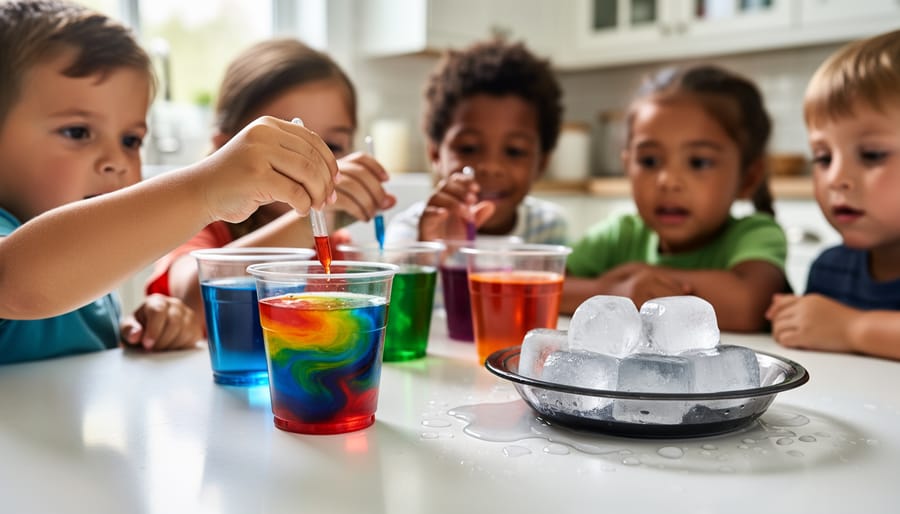
The kitchen is a ready-made lab, and you already own most of what you need. Try a few simple experiments: drop food colouring into water and watch two colours blend into a new one, or set an ice cube on a plate and guess how long it will take to melt. Then let your child stand beside you to measure, pour, and stir. Doing the real work feels important to a three- or four-year-old, and it teaches more than you’d expect.
Here’s what’s quietly happening. Your child follows steps in order, practises counting scoops, and compares “more” and “less.” They also start asking why things change, which is the beginning of scientific thinking. Wondering aloud helps: “What do you think will happen if we add one more scoop?”
This one earns its keep on cold Calgary days when playing outside isn’t appealing. Keep a towel handy, put a tray or baking sheet under the mess, and let your little helper do as much as possible themselves.
7. Music, Movement, and Sing-Along Games
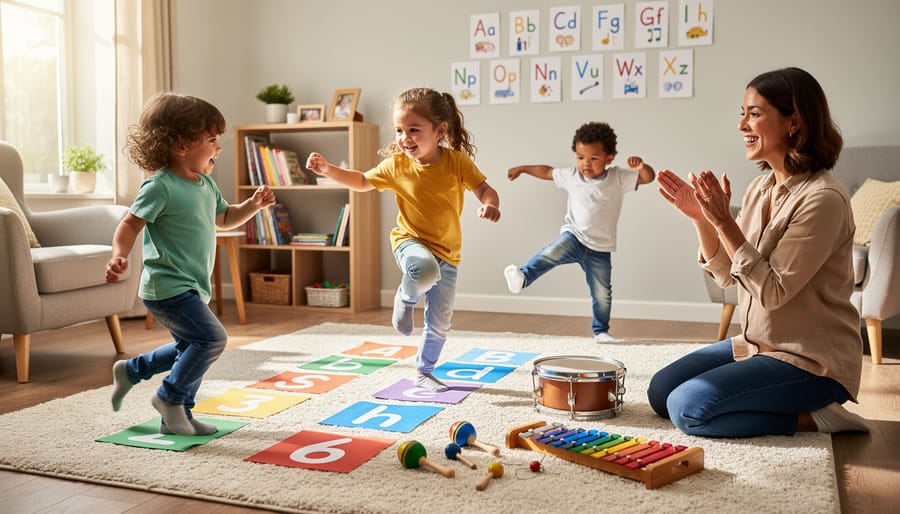
Music and movement are some of the easiest ways to teach preschoolers without them even realizing it. Put on a favourite song and let the whole family join in. Freeze dance is a classic: when the music stops, everyone holds still like a statue. It sounds silly, but it quietly builds listening skills and self-control.
Action rhymes like “Head, Shoulders, Knees and Toes” help kids learn body parts and new words while they wiggle. Follow-the-leader works the same way. Take turns being the leader and try stomping, tiptoeing, hopping, or clapping a simple rhythm for others to copy.
The best part is that none of this needs much space or gear. A small apartment living room is plenty, and a pot and wooden spoon make a great drum. Keep sessions short, five to ten minutes is often enough, and let your child pick the next song. Those little bursts of play add up fast, especially on chilly Calgary days when everyone needs to burn off some energy indoors.
8. Pretend Play and Playdates, Practicing Social Skills
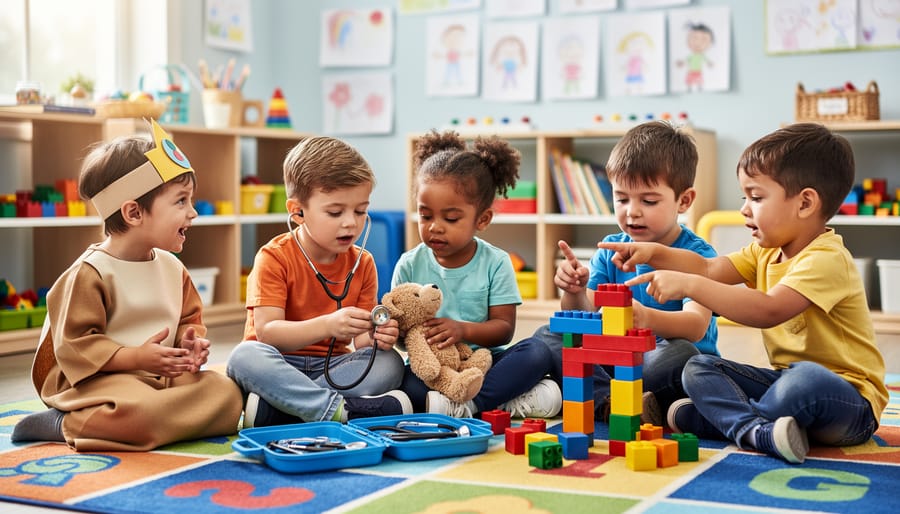
Preschoolers are natural actors, and pretend play is one of the best ways to build social skills without them even noticing. Set up a simple pretend grocery store with empty cereal boxes and play money, a doctor’s office with a stuffed animal patient, or a cozy kitchen with pots and wooden spoons. Then let the story unfold.
When another child joins in, the learning really kicks in. Kids practice taking turns, sharing props, and explaining their ideas. They also work through small problems, like who gets to be the shopkeeper or what to do when the “store” runs out of apples. Those little negotiations are real communication practice.
A quick tip is to follow your child’s lead and ask open questions like “What does your patient need?” instead of directing the game.
If you’re new to Calgary, playdates can feel tricky to arrange at first. Community centres and local family programs are friendly places to meet other parents and find playmates, and a casual drop-in session is an easy way to start building connections for both of you.
Your Questions About Preschool Learning, Answered
How long should each activity last?
Aim for 10 to 20 minutes. Preschoolers do best with short bursts of play, so stop while they’re still enjoying it and try again later.
What if my child loses interest quickly?
That’s completely normal at ages 3 to 5. Try a more active option like music and movement, or let your child lead and change the activity however they like.
Does screen-based learning count?
It can have a place, especially when you watch together and talk about what you see. Hands-on play usually builds more skills, so think of screens as a small extra rather than the main event.
How can we keep learning going through Calgary’s winters?
Lean on indoor favourites like sensory bins, play dough, kitchen science, and library storytime. On milder days, bundle up for a short scavenger hunt at a nearby park.
When should I talk to a professional about development?
If you’re worried about your child’s speech, movement, or social skills, it’s always fine to ask your family doctor or public health nurse. You know your child best, and early questions are never wasted.
Every family’s rhythm looks a little different, so use these answers as a starting point and adjust to fit your child.
Final Takeaway: Keep Learning Playful and Simple
You really don’t need fancy materials to help your preschooler learn. A cardboard box, a handful of buttons, or a favourite song can do the job just as well as anything from a store. What matters most is showing up for a few minutes of focused play each day, because those small moments add up quickly.
Calgary makes it easier, too. Our parks, library branches, and community spaces are full of friendly support for young learners and their families. If you’re new to the city, take it one activity at a time, and know you’re welcome here. Your little one is already off to a great start.